From MB to DTFR: Understanding the New Daimler Truck Specification System

DTFR, short for Daimler Truck Fluid Release, is a new system of fluid standards developed by Daimler Truck AG following its separation from Mercedes-Benz Group AG. It replaces the previous Mercedes-Benz (MB) specifications and introduces a more structured, technically detailed framework for fluids used in modern commercial vehicles. This article outlines what the transition means for workshops, fleet managers, and distributors, summarizes the key aspects of DTFR, and explains how Wolf Lubricants is supporting a smooth and transparent transition across the industry.
What has changed?
The heavy-duty sector continues to evolve, driven by tighter emissions standards, advancing engine technologies, and the growing need for operational efficiency. One of the most notable developments in recent years is the shift from Mercedes-Benz (MB) fluid specifications to the new Daimler Truck Fluid Releases (DTFR).
This change follows Daimler’s 2021 separation into two independent companies:
- Mercedes-Benz Group AG (MBAG) – responsible for passenger cars and vans
- Daimler Truck Holding AG (DTAG) – focused on trucks and buses
With this structural split, Daimler Truck AG introduced its own DTFR standard system, replacing previous MB specifications and adding new, application-specific ones where no equivalent existed before.
For fleet operators, distributors, and workshops, the introduction of DTFR means a clearer, more precise framework for fluid selection, and the need to stay informed as these standards are gradually rolled out across product categories.
Key Aspects of DTFR
- Replacement for Old Specifications: DTFR replaces the former Mercedes-Benz (MB) fluid specifications, with a phased transition that began in 2023.
- Unique Codes: Each DTFR code — for example, DTFR 15C110 — provides specific technical information about the product’s application, viscosity range, and formulation characteristics.
- Application-Specific Standards: DTFR classifications apply to a wide range of fluids, including:
- Engine oils (e.g., DTFR 15C for engines with Diesel Particulate Filters)
- Transmission oils
- Axle and gear oils
- Technical Requirements: Each specification sets stringent performance and compatibility standards, covering aspects such as wear protection, thermal stability, oxidation control, and compatibility with aftertreatment systems used in modern heavy-duty diesel engines.
In practice, DTFR offers a more transparent and technically robust way to identify the right lubricant or fluid for Daimler Truck applications.
Original MB Specifications and the New DTFR System
The tables* below provide an overview of how some former MB specifications correspond to their DTFR equivalents. The products highlighted in bold are approved.
*Our tables are based on the conversion values published in Daimler Truck AG’s DTFR Overview (PDF), which supplied the key data we referenced.
Engine Oils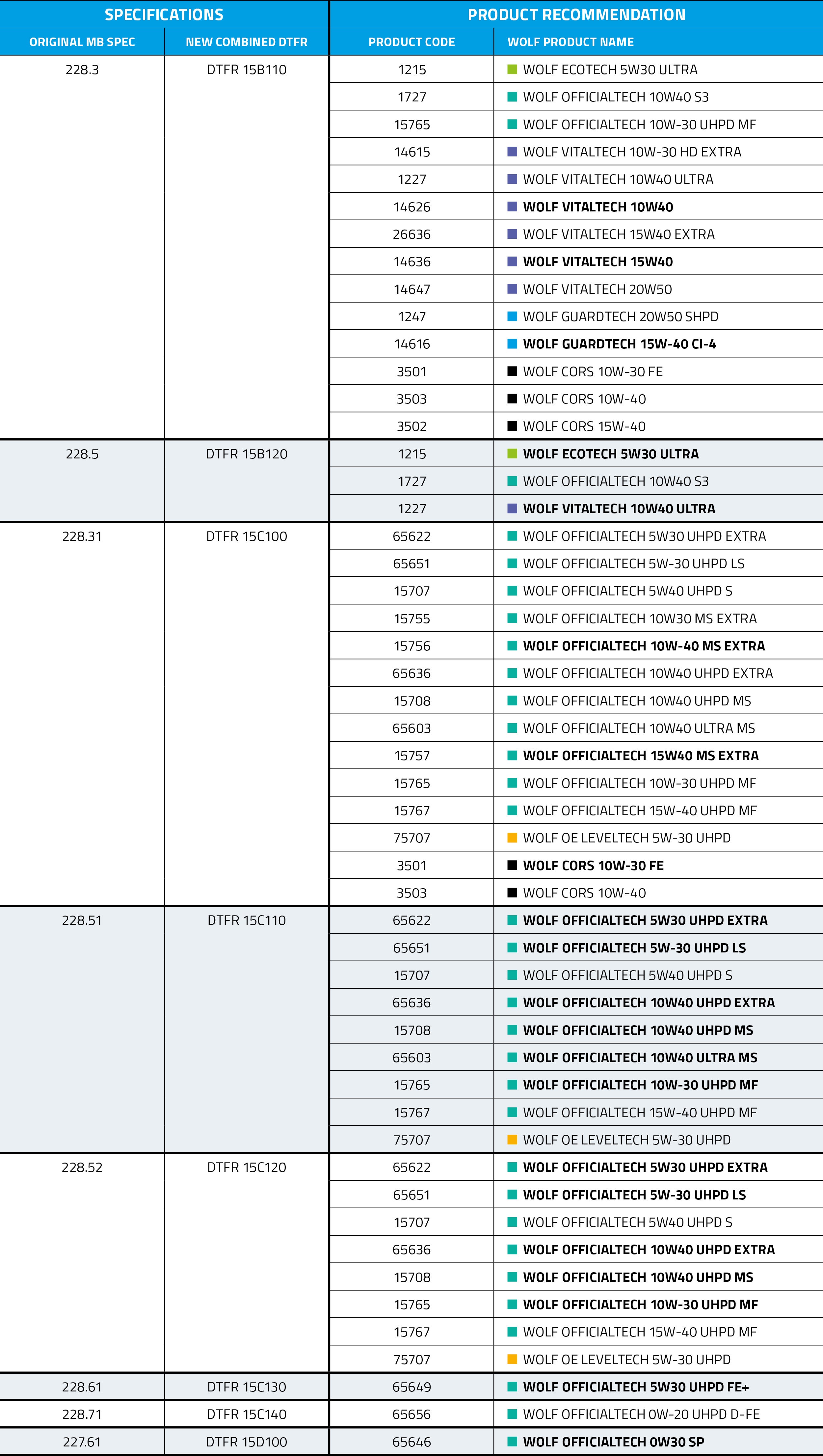 Products in bold are approved. |
Axle and Manual Transmission Oils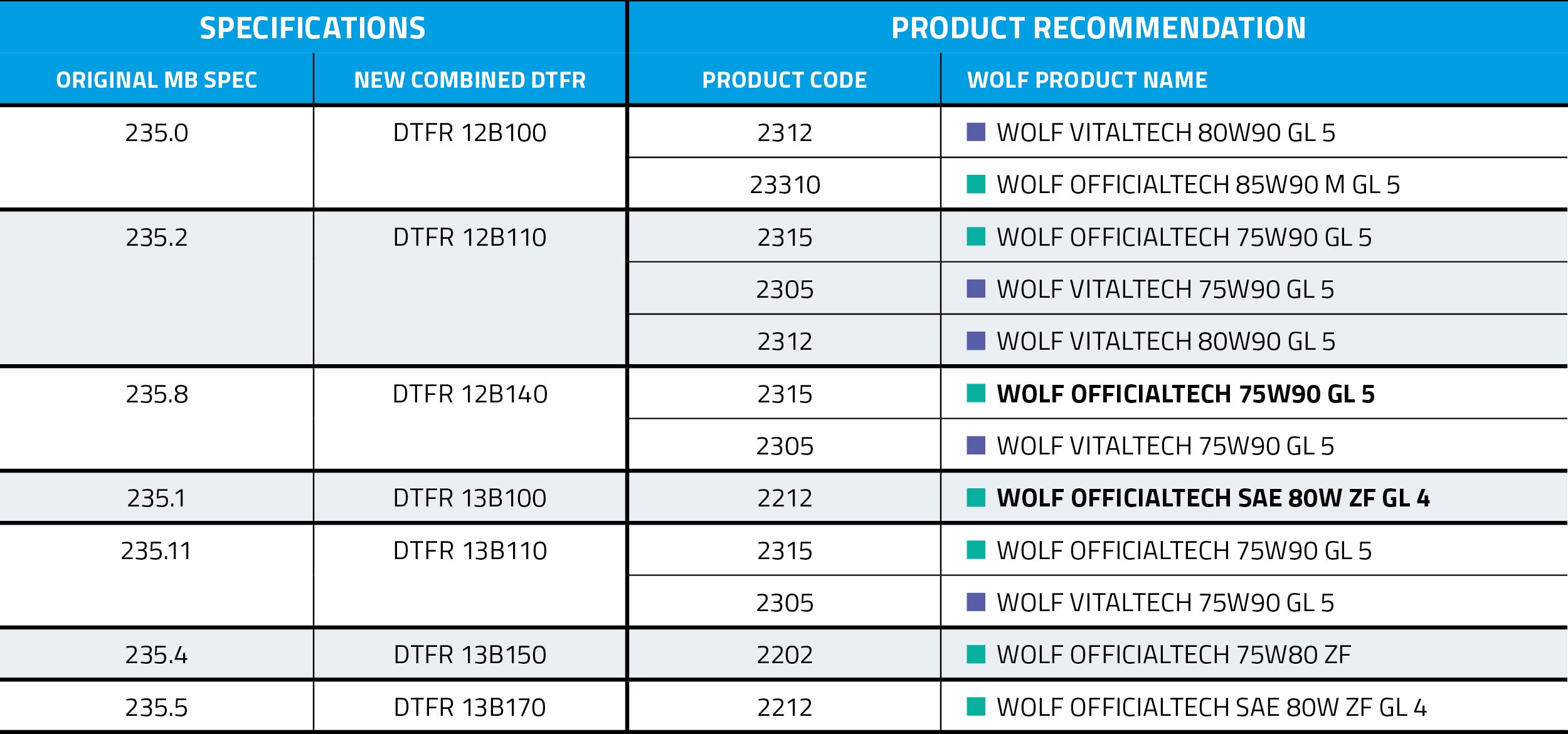 Products highlighted in bold are approved. |
Gear Oils (Retarder)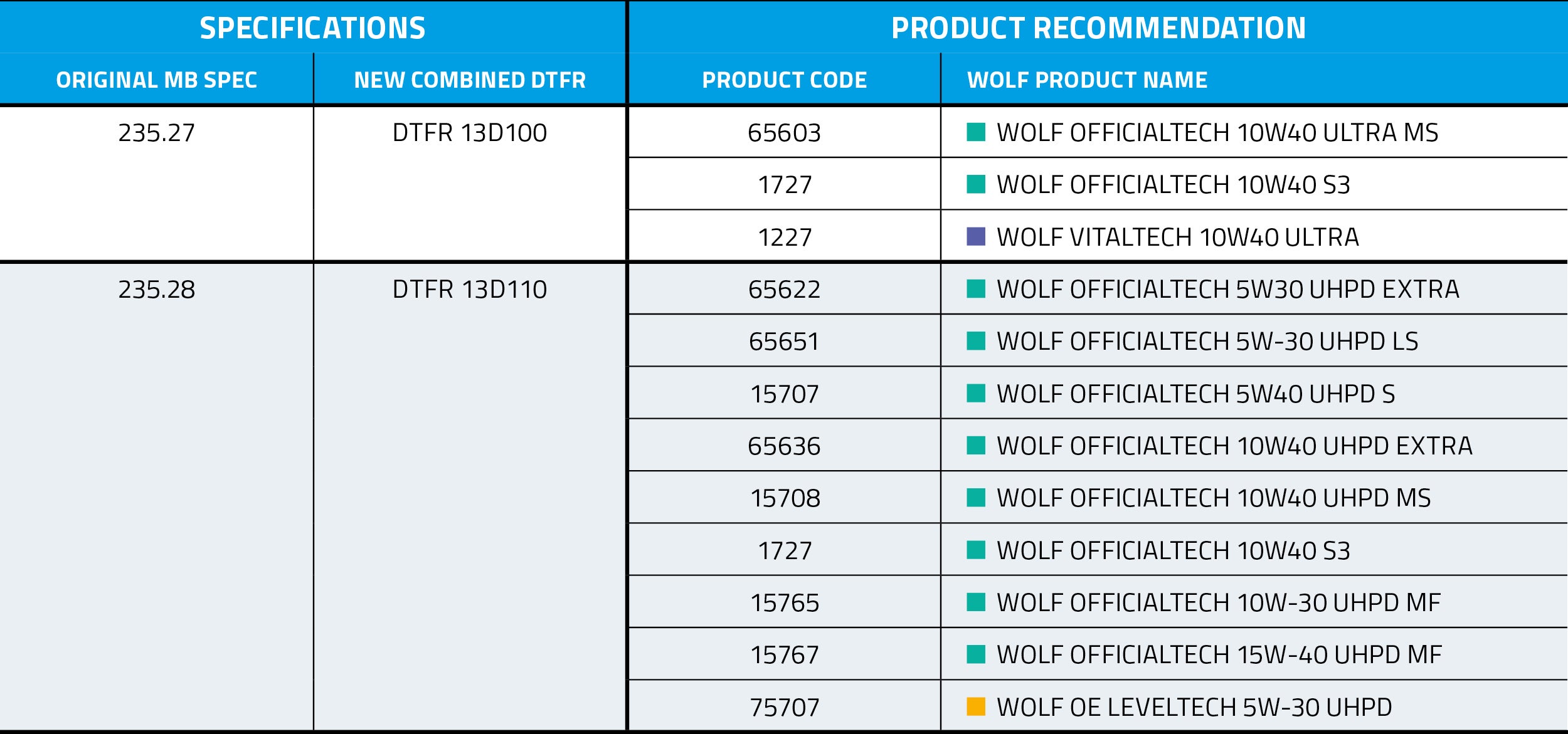 Products in bold are approved. |
Automatic Transmission Fluids (ATF)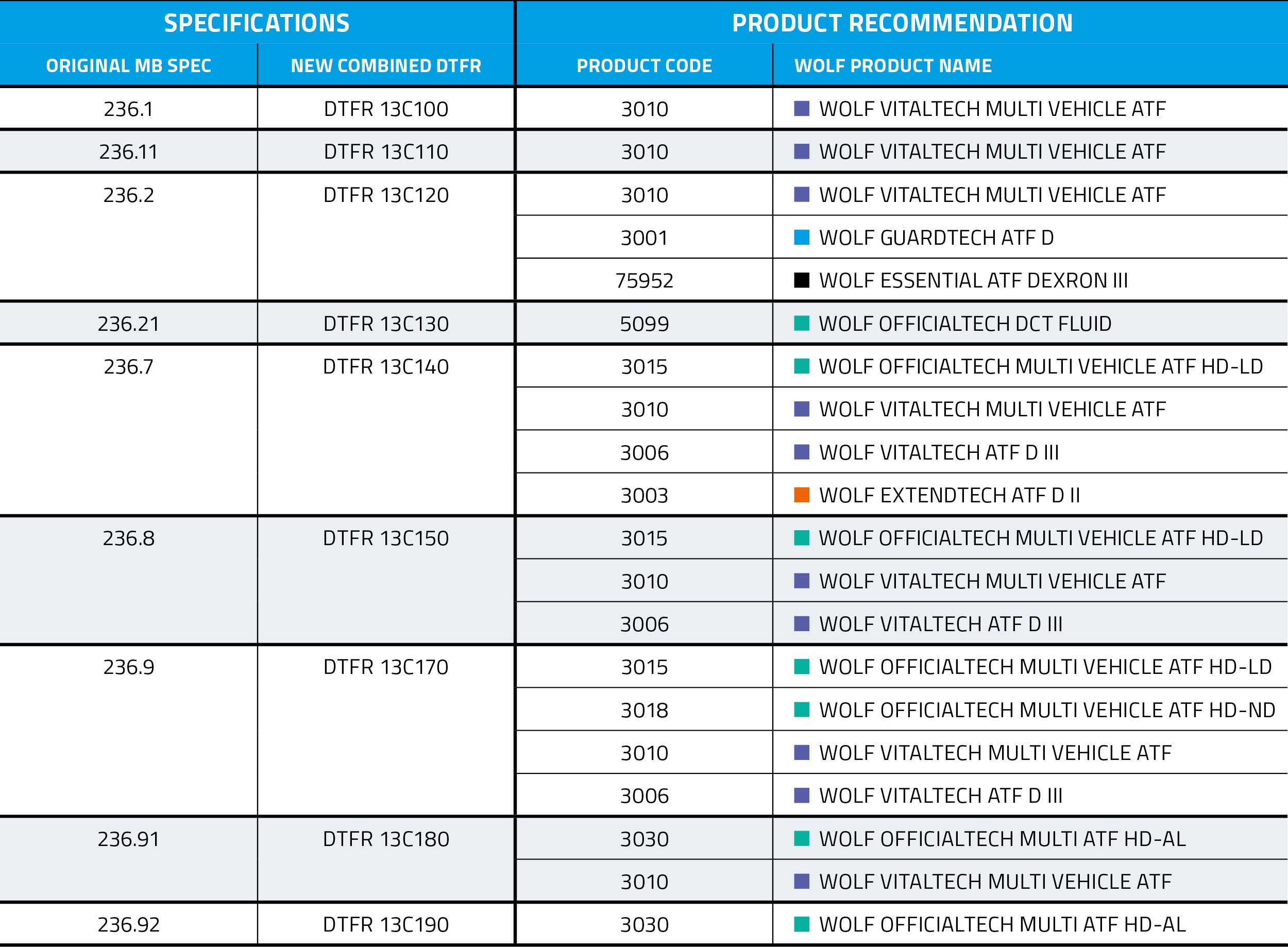 Products in bold are approved. |
Hydraulic Oils Products in bold are approved. |
Brake Fluid Products in bold are approved. |
Steering Gear Oil Products in bold are approved. |
Coolants and Antifreeze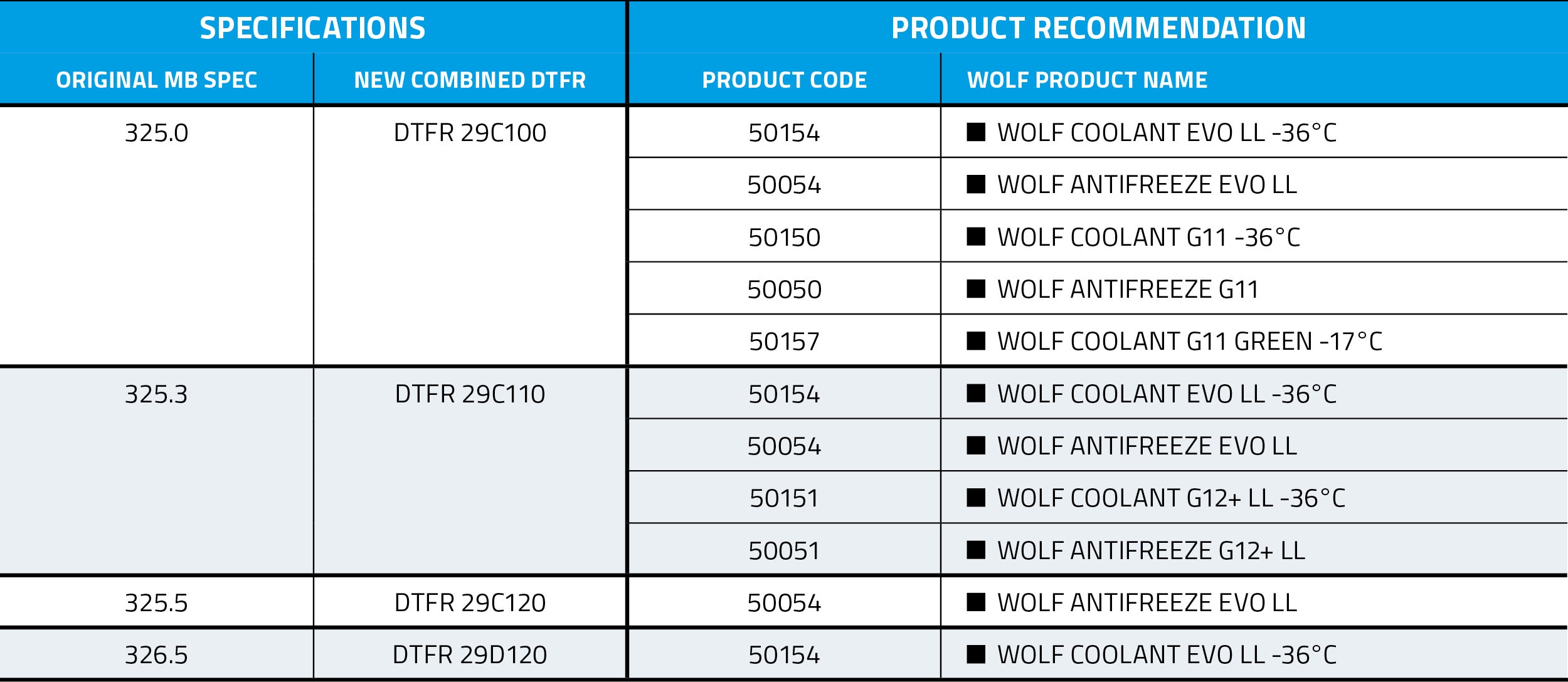 Products in bold are approved. |
Wolf Lubricants: Ready for the Transition
At Wolf Lubricants, we see these changes not as a challenge, but as an opportunity to prove our commitment to innovation, compliance, and customer support. Our heavy-duty portfolio has already been aligned with the new DTFR standards, ensuring that our products deliver the performance, efficiency, and protection Daimler Truck demands.
From advanced engine oils to transmission fluids and coolants, our range is continuously updated to reflect the latest OEM approvals. All corresponding technical data sheets, labels, and marketing assets will be revised to give you full clarity on compliance.